When Giving Is Seen, It Is Learned: A Reflection on Stewardship
Children have a way of imitating what they see.
A little girl slips into her mother’s shoes and walks carefully across the floor, arms out for balance. A young boy stands on a stool beside his father, face covered in shaving cream, copying each motion as best he can. They are not being taught in those moments. They are watching—and then doing.
Over time, what children see begins to shape how they understand what matters.
In the Church, stewardship becomes part of how faith is lived and learned. The U.S. Conference of Catholic Bishops defines stewardship as “… the grateful response of a Christian disciple who recognizes that everything they have—time, talent, and treasure—is a gift from God, and chooses to share those blessings generously with others.”
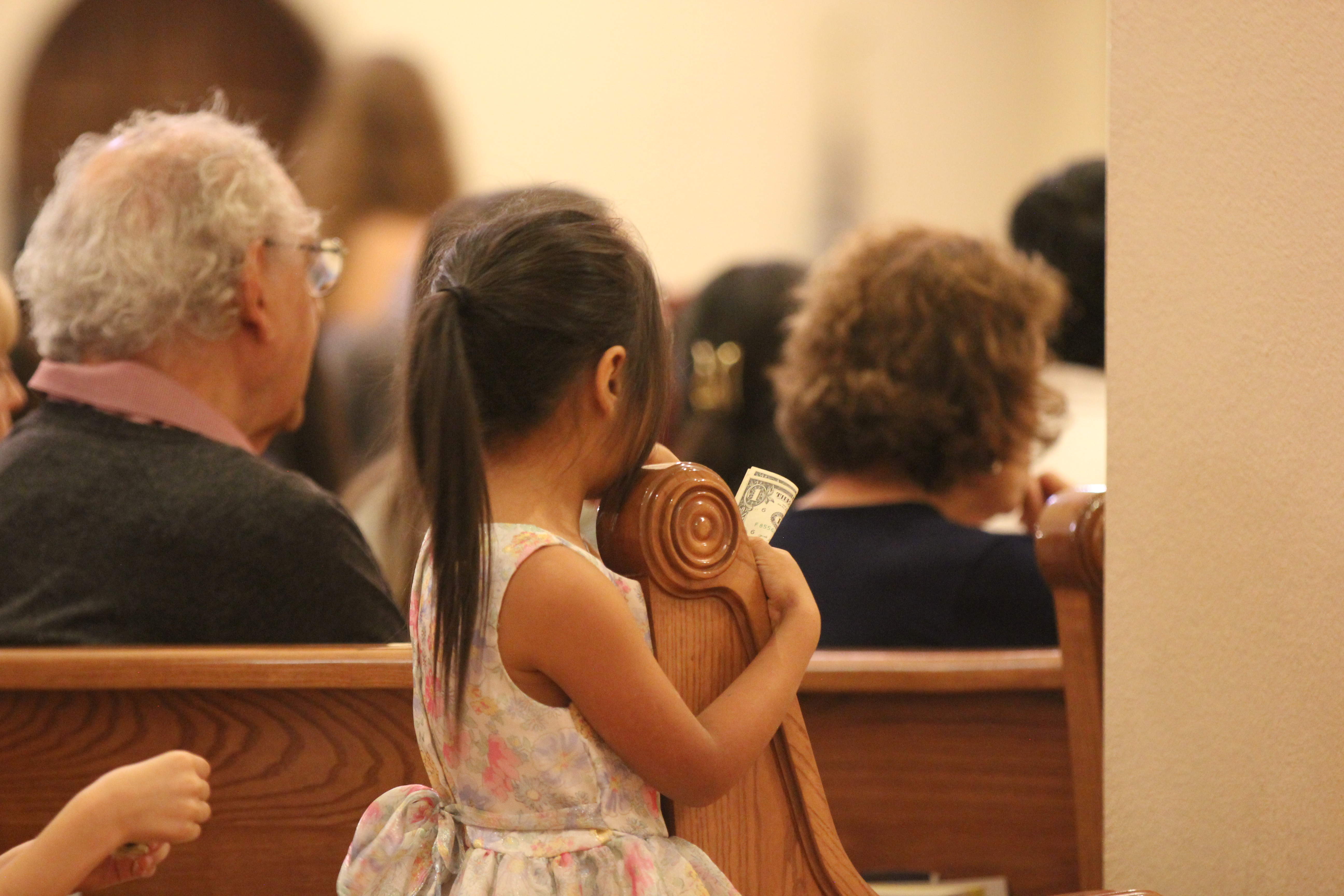
As children see us pray, participate in the life of the Church, and support her through our generosity, they begin to recognize what holds value. Not because it is explained, but because it is practiced.
When it comes to generosity, many forms of giving today happen outside that visible moment. A recurring online gift or a check mailed once a month may never be seen by the children growing up beside us. In many cases, the generosity is there, but when giving is never seen or spoken about, an important opportunity for formation can be missed.
Children often come to understand participation in the Church by watching what the adults around them value, practice, and support.
What is practiced becomes what is known. And, in time, what is known becomes what is lived—and what is passed on.